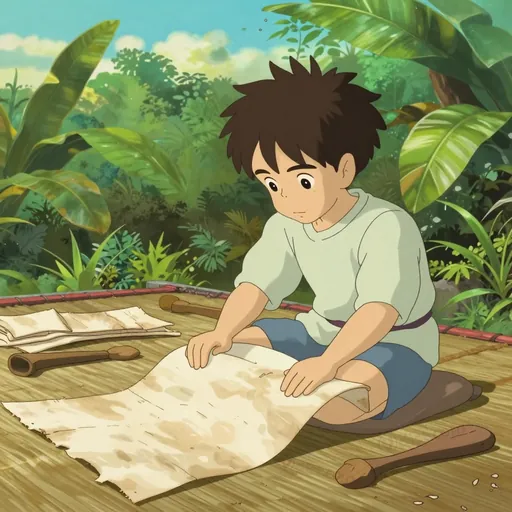
tappa bark
Definition
Noun: 1. The thin, fibrous inner bark of the paper mulberry tree (Broussonetia papyrifera) or the Pipturus albidus tree: This material is historically significant as a primary substance used in the traditional production of tapa cloth across Polynesia and parts of Oceania. The bark is harvested, soaked, and beaten into thin, felt-like sheets.
Usage
- The term is used specifically to refer to the raw material—the processed bark itself—before it is made into cloth.
- It is often discussed in cultural, historical, or anthropological contexts related to Pacific Island societies.
Examples
- The artisans carefully stripped the tappa bark from the tree to prepare it for beating.
- Traditional methods require soaking the tappa bark to soften its fibers.
- An exhibit on Pacific cultures displayed tools used for processing tappa bark.
Advanced Usage
- The term can be used metonymically to refer to the traditional cloth-making process or the cultural heritage associated with it.
- The knowledge of working with tappa bark is passed down through generations.
Variants and Related Words
- Tapa (noun): The finished cloth or paper made by beating tappa bark. This is the more common term for the final product.
- Kapa (noun): The Hawaiian word for both the bark and the cloth made from it.
- Bark cloth (noun): A general descriptive term for cloth made from beaten tree bark, which includes tapa.
Synonyms
- Inner bark
- Bast fiber (in this specific context)
Notes on Meaning
- Tappa bark refers specifically to the plant material. It is distinct from tapa cloth, which is the finished product created from this bark. The two terms are closely related but describe different stages of production.
Noun
-
the thin fibrous bark of the paper mulberry and Pipturus albidus